
How to Transport Oxygen Cylinders Safely in a Hospital
- Author
- By Raphael Perlmann
- Reading time
- 4 min read
- Machines
- 3 in this guide
Summary
Secure each cylinder upright, cap the valve, keep oxygen away from fuel gases and move at walking speed. The rules, the steps and when a powered cylinder cart makes sense.
On this page
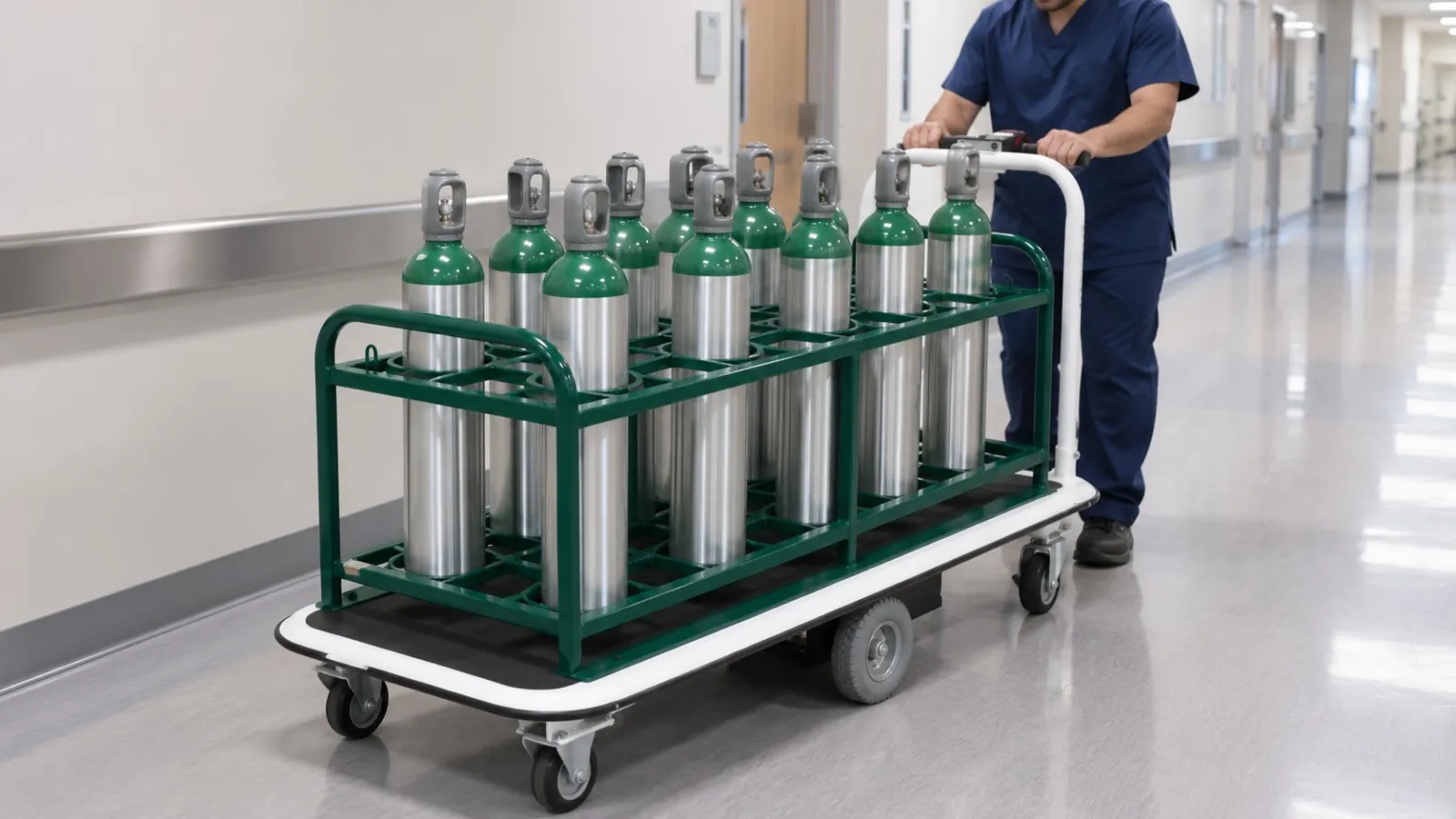
To move an oxygen cylinder safely in a hospital, secure it upright on a cart or rack so it cannot fall, slide or roll, keep the valve cap on until the cylinder is connected, and move at walking speed on a clear route. Most handling rules come back to one fact. A full cylinder holds gas at high pressure, and the valve is the weak point.
If a cylinder tips and the valve shears off against a hard surface, the escaping gas can drive the cylinder across a room. That is why a loose cylinder is never acceptable in transit. Every safe method does three things. It holds the cylinder upright, protects the valve and keeps the move under control.
Which rules apply
In a US hospital, cylinder handling falls under OSHA 29 CFR 1910.101 for compressed gases, OSHA 29 CFR 1910.253 for keeping oxygen apart from fuel gases in storage, NFPA 99 for medical gas in health care facilities, and the Compressed Gas Association handling guidance that OSHA references. The Joint Commission checks that the hospital enforces them through written policy and staff training.
Read together they say the same thing. Keep cylinders upright and secured, protect the valve, keep oxidizers away from fuel gases, keep full and empty cylinders apart, and move cylinders on equipment built for the job. Your facility policy is what staff are held to, and it can be stricter than the codes.
Step by step
- Close the valve fully and bleed the pressure out of the regulator before you disconnect anything.
- Fit the valve protection cap on any cylinder made for one.
- Check the cylinder for dents, corrosion or a leak, check that the cart brake holds, and make sure no oil or grease is on the fittings.
- Load the cylinder upright and restrain it with a chain, a strap or a fitted rack.
- Move at walking speed. Slow down at ramps, door thresholds and elevator gaps, and never leave a loaded cart alone on an incline.
- At the destination, set the brake and check the cylinder is still secured before you connect it.
Oxygen is an oxidizer
Oxygen does not burn by itself. It makes other materials catch fire more easily and burn hotter. Keep oil and grease off oxygen valves, regulators and fittings, keep combustibles such as paper and linen off the cart, and keep the route clear of heat and open flame.
When a powered cart makes sense
A wheeled cart takes the lifting out of the job. A powered cart also takes out the pushing and pulling, which is where back, shoulder and hand strain comes from when staff move full racks over long routes or up ramps. For one cylinder on a short, flat trip, a secured manual cart is enough. For full racks, see the motorized gas cylinder carts.
Our MGC medical gas cylinder carts hold 24 to 48 M7, M9, C, D or E cylinders upright on a powered base rated for 6 degree inclines, with a brake that stops roll back when the operator stops. The coated racks keep cylinders off bare metal, which also keeps the cart quiet in the halls. For liquid cylinders, the Pony Express 2010 carries one liquid cylinder or up to four K size cylinders, and the Pony Express 2100 loads and unloads a liquid cylinder up to 850 lb by itself.
Size the rack to the number of cylinders one person moves on a normal trip, not the largest number the cart could hold. Then check the steepest ramp on the route against the cart rating.
A powered cart is a handling aid. It does not meet NFPA 99, OSHA or your facility policy by itself. Staff still close and cap valves, secure each cylinder and keep gases apart. The cart makes the safe method easier to follow.
Questions
Can an oxygen cylinder be moved lying down?
No. Move medical oxygen cylinders upright and secured. A cylinder on its side can roll or slide off a cart and let the valve strike a hard surface.
Does the valve cap go on before the move?
Yes, on any cylinder made for one. Close the valve and bleed the regulator first, then fit the cap, then load the cylinder upright and secure it.
How far apart must oxygen and fuel gas cylinders be kept?
Oxygen must be kept apart from fuel gases in storage by a set distance or a fire rated barrier. Use the figure in the code your facility has adopted, from OSHA 29 CFR 1910.253 and NFPA 99, for any sign or label.
Who can move medical gas cylinders?
Staff the hospital has trained and authorized under its written handling policy, such as porters, respiratory therapists, nurses and facilities technicians. The codes set the handling requirements, and the hospital decides who is trained to follow them.
Machines in this guide
-
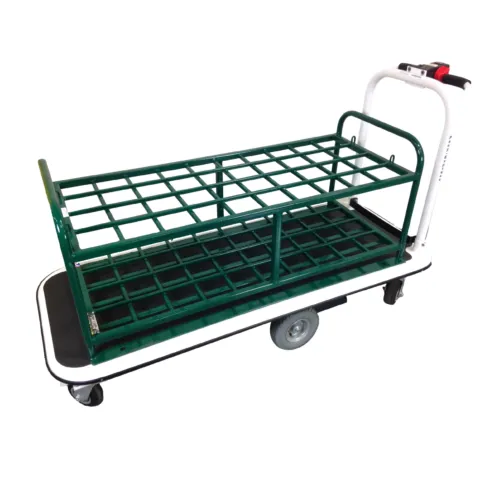
Pony Express MGC-S24C Medical Gas Cylinder Cart for 24 Cylinders
3 mphTop speed
- Battery
- AGM, deep cycle
- Charger
- Onboard, 100 to 240 VAC, 50/60 Hz
-
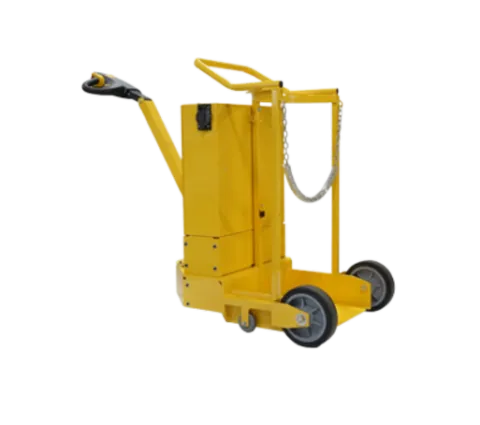
Pony Express 2010 Cylinder Delivery Cart
3 mphTop speed
- Charger
- Onboard, 100 to 240 VAC, 50/60 Hz, UL and CSA listed
- Drive
- Motor wheel linked to the tiller
-
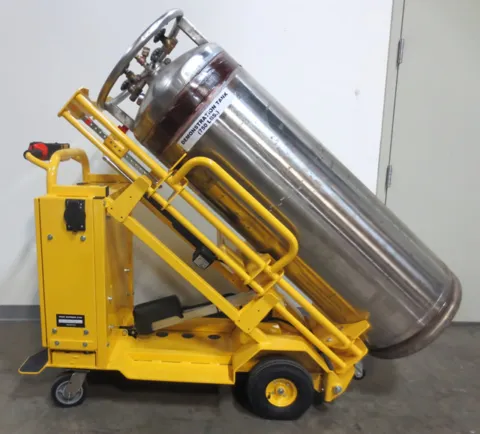
Pony Express 2100 Cylinder Delivery Cart
850 lbLoad capacity
- Top speed
- 3 mph
- Charger
- Onboard, 100 to 240 VAC, 50/60 Hz, UL and CSA listed
Related collections
-
Motorized Carts
More guides
-
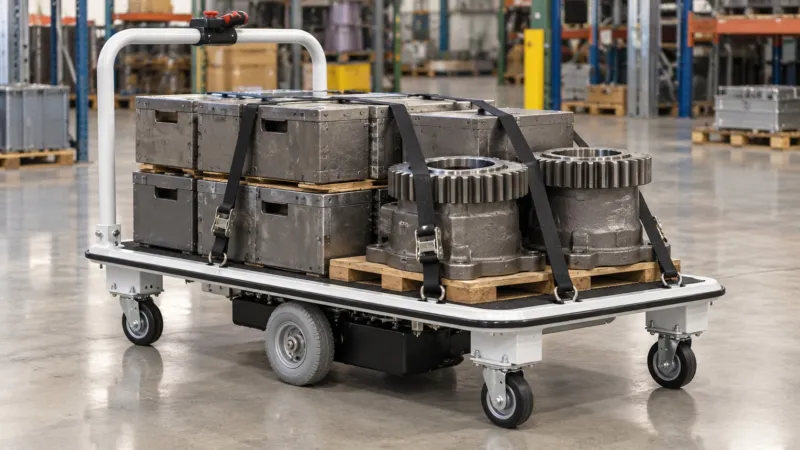
Platform Carts
How to Choose a Motorized Platform Cart by Load Capacity
Weigh the heaviest single load, then pick the lightest platform cart rated above it. Deck size, deck height and the ramps on the route decide the rest.
-
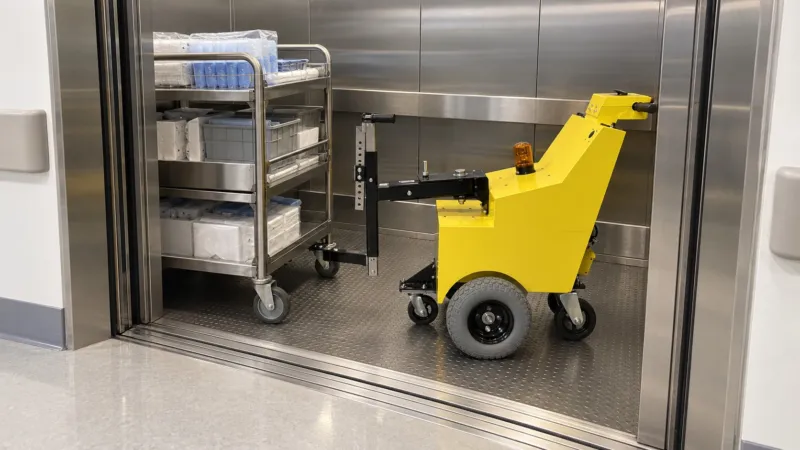
Compact Tuggers
How to Choose an Electric Tugger for Narrow Aisles and Tight Spaces
Measure your tightest aisle, door and elevator first, then pick the smallest tugger body that clears them and still tows your heaviest cart.
-
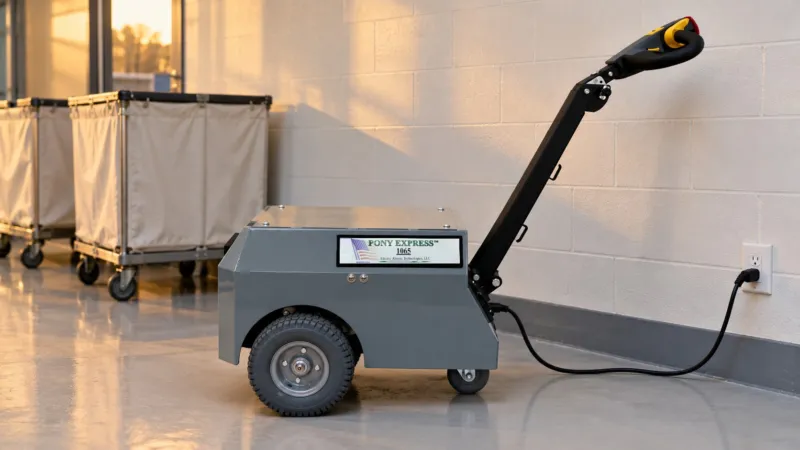
Lithium Tuggers
How to Pick a Tugger Battery for Runtime, Charging and Multi-Shift Use
Pick a tugger battery by your shift pattern. AGM fits one shift with an overnight charge, and a swappable lithium pack keeps a tugger working across back to back shifts.