
When to Use a Tugger Instead of a Forklift
- Author
- By Raphael Perlmann
- Reading time
- 5 min read
- Machines
- 8 in this guide
Summary
Use a tugger when the job is towing wheeled loads across a floor, and keep the forklift for anything that lifts. This guide shows how to tell the two jobs apart and spec the tugger.
On this page
Use a tugger instead of a forklift when the job is moving wheeled loads across a floor. Keep the forklift for any job that lifts. A tugger pulls and a forklift lifts, so the question is whether the load has to go up or only across.
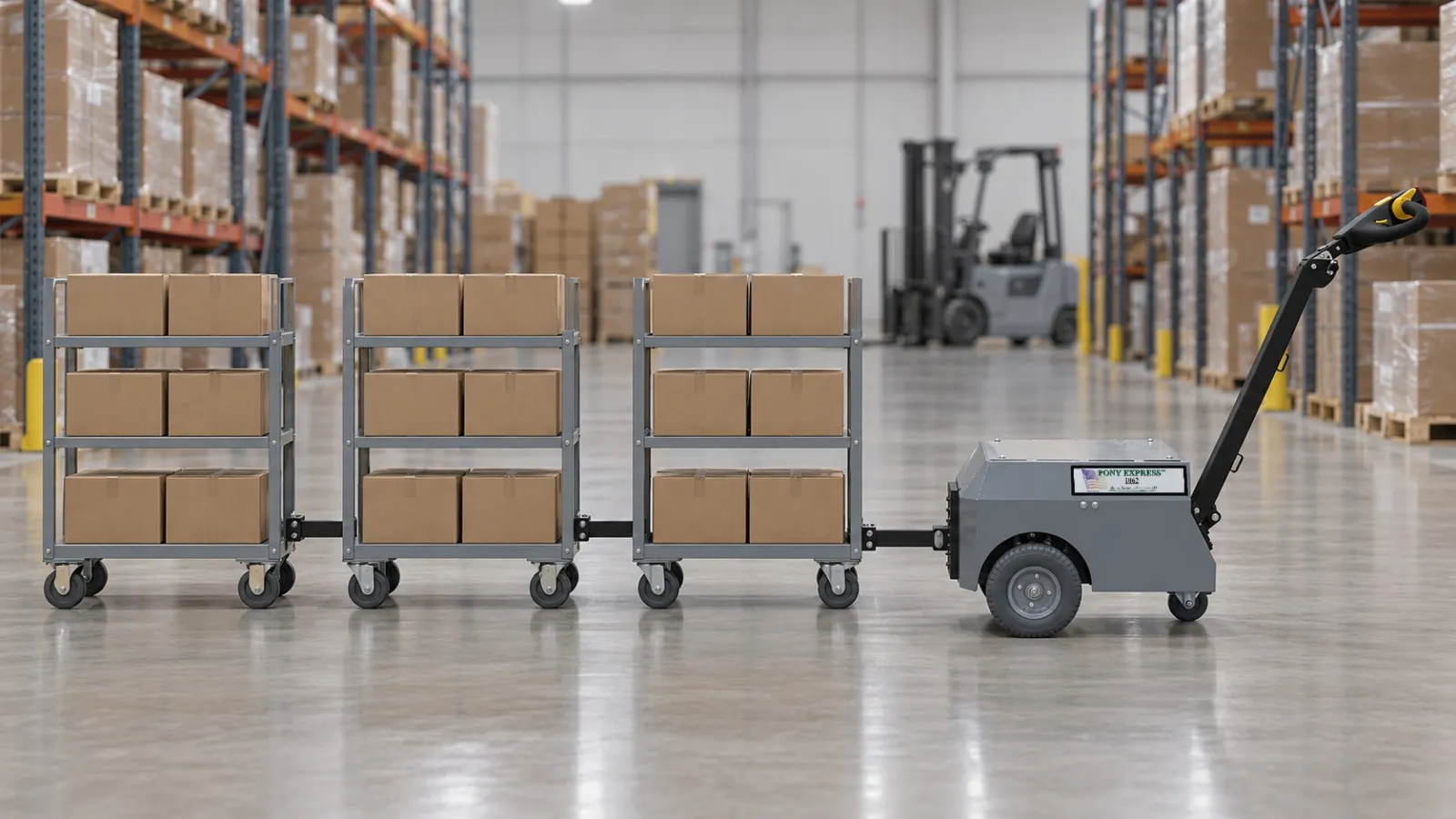
A walk-behind electric tugger hitches to a cart that already rolls and tows it at walking pace. It does not raise a load, stack a pallet or reach into a trailer.
What each machine does
A forklift lifts. Its mast raises a pallet, sets it on a rack and brings it back down. The counterweight in its chassis keeps it from tipping under the load.
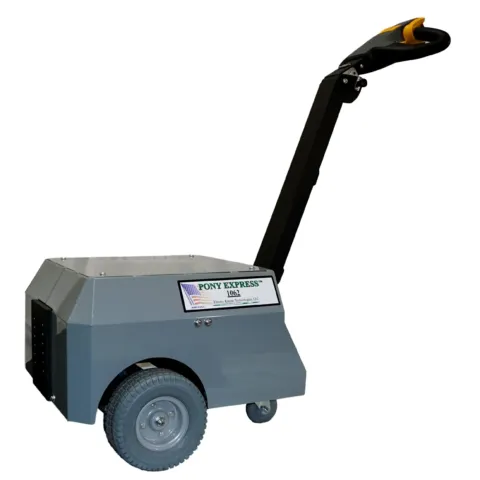
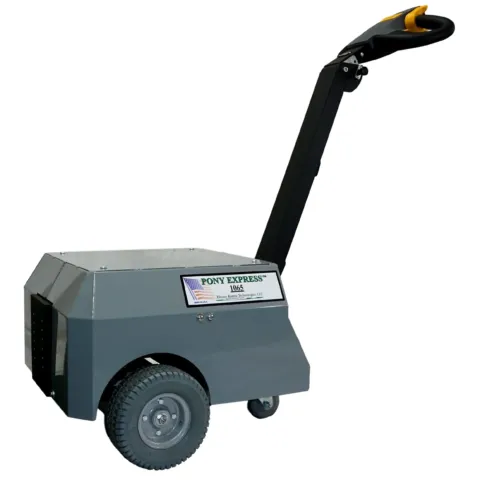
A tugger tows. It has no mast and no forks. It couples to a cart, rack or bin on casters and pulls it across the floor while the operator walks with it. The 1061-HD, 1062 and 1065 run a 24 volt DC motor. The AC Tugger 25K+ runs a 48 volt AC transaxle.
Many facilities use a forklift for towing because it is the powered machine already on the floor. That ties up a lift truck on work that never leaves the ground.
The tugger side in more detail, hitch to brake, is what a tugger machine is and how it works.
Signs the job needs a tugger
The load rolls
If the load sits on wheels or can ride on a cart, it needs pulling, not lifting. Forks add nothing to a load that never leaves the floor.
The aisles are tight
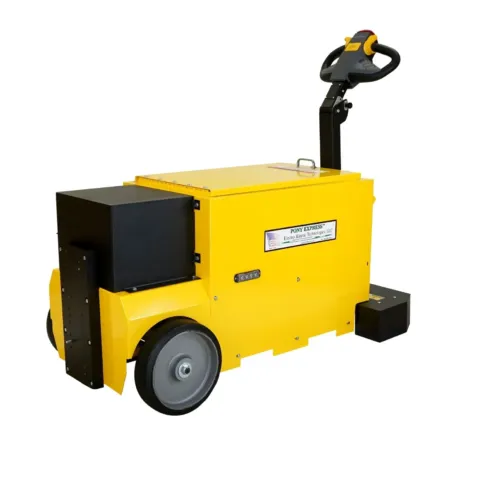
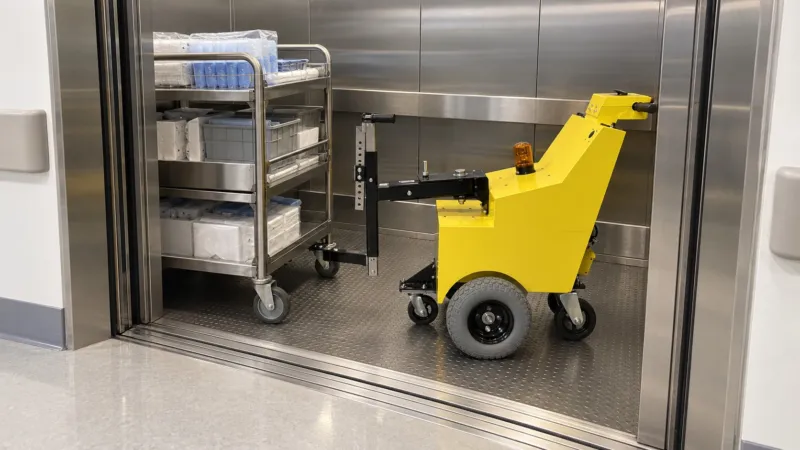
A forklift needs room to turn with a load on its forks. A walk-behind tugger is narrow. The Pony Express 1062 and the 1065 share a body 25 inches long and 24 inches wide. The 1061-HD is 22 inches wide.
The same route repeats all shift
One operator can tow a train of carts in a single trip. That replaces back and forth runs with one load at a time.
The route is long
Steady towing across a building at walking pace is the work a tugger is built for. The AGM models run up to 8 hours on a charge, which covers a full shift of normal cart moves.
You want to drop fuel
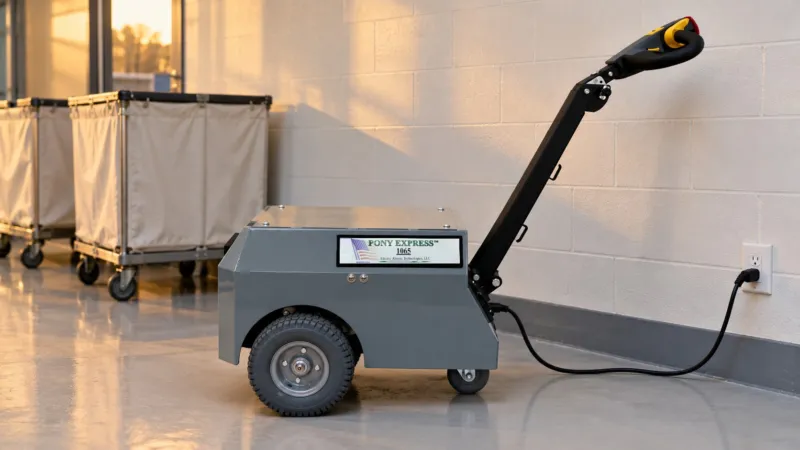
An AGM Pony Express tugger charges from a standard 120 or 240 volt outlet with its onboard charger. There is no propane or diesel to buy or store.
The load is very heavy but still rolls
Weight alone does not mean a forklift. The CartCaddyHD ChainDrive electric tug moves carts and equipment up to 50,000 lb, including carts on rail. A hydraulic lift on the tug raises up to 6,000 lb of the load onto the drive for traction.
When to keep the forklift
Keep the forklift for any job that lifts. A tugger cannot put a pallet on a rack, load or unload a trailer, or pick at height.
Most facilities run both. The tugger takes the repeated cart, rack and bin runs across the building. The forklift keeps the lifting and stacking. The tugger does not retire the forklift. It frees it for the lifting.
Operators and safety
Both machines need trained operators. Follow your own safety program for training and inspections, whichever machine you run.
On the tugger side, models such as the 1061-HD, 1062 and 1065 use dead man operation. When the operator lets go, the unit comes to a controlled stop. An electromagnetic parking brake holds a parked load on an incline.
How to spec the tugger
Match the tugger to the rolling weight of your heaviest load, the narrowest gap on the route and the hours it must run. Then pick the model that clears all three.
- Weigh the loaded cart train and pick the next step up. Ratings are for a flat floor, and a ramp lowers them.
- Measure the tightest aisle, door and elevator on the route.
- Count the shift hours. An AGM model covers one shift. For back to back shifts, a lithium model swaps packs in seconds.
- Note the steepest ramp and send us the grade.
| Model | Tows on casters | Length by width |
|---|---|---|
| Pony Express 1061-HD | 2,000 lb | 22 to 42 in by 22 in |
| Pony Express 1062 | 2,000 lb | 25 by 24 in |
| Pony Express 1065 | 5,000 lb | 25 by 24 in |
| Pony Express 1065-XHD | 7,500 lb | 25 by 24 in |
| Pony Express AC Tugger 25K+ | 25,000 lb | 52 by 30 in |
The AC Tugger 25K+ also tows up to 100,000 lb on rails. It recharges in about 90 minutes on its external charger, and a jog button inches it into the hitch so one operator can couple a heavy cart.
For multi-shift work, the 1061-HD Lithium tows the same 2,000 lb as the AGM model on a pack that swaps in seconds. The 1065 Lithium tows 5,000 lb on casters and up to 20,000 lb on rails.
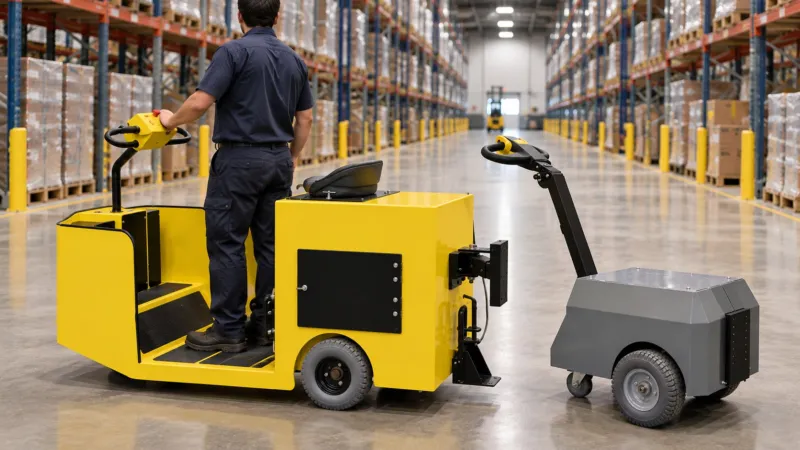
Route length then decides between a walk-behind and a ride-on tugger.
Questions
When should you use a tugger instead of a forklift?
Use a tugger when the load rolls and only needs to cross the floor. Use the forklift when the load has to go onto a rack or into a trailer. Tight aisles also point to a tugger.
Can a tugger replace a forklift?
Not if any of your work lifts. A tugger never lifts a load off the floor. Most facilities run both machines and give the towing to the tugger.
How much can a walk-behind tugger pull?
The Pony Express line tows 1,500 to 25,000 lb on casters on a flat floor, depending on the model. The AC Tugger 25K+ tows up to 100,000 lb on rails. A ramp lowers what any tugger can pull.
Will a tugger fit an aisle a forklift cannot use?
Often it will. The 1062, 1065 and 1065-XHD are 24 inches wide, and the operator walks with the load. Measure the tightest point of the aisle and add room for the operator and the cart behind.
Machines in this guide
-
-
-
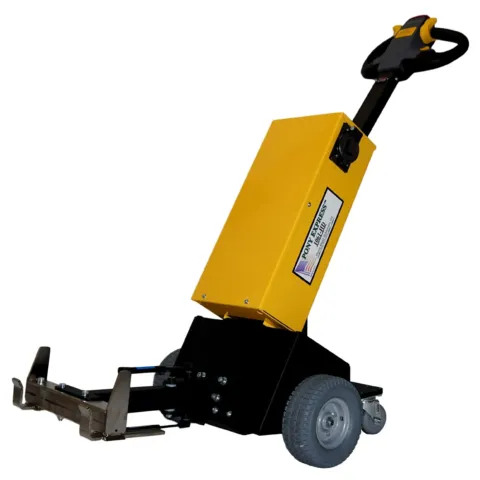
Pony Express 1061-HD Electric Tugger
2,000 lbTowing capacity
- Top speed
- 3 mph
- Run time per charge
- 8 hours
-
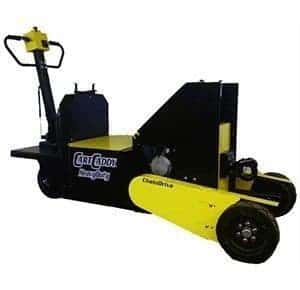
CartCaddyHD ChainDrive Electric Tug
50,000 lbTowing capacity
- Top speed
- 3 mph
- Run time per charge
- 16 hours
-
Pony Express 1065-XHD Electric Tugger
7,500 lbTowing capacity
- Top speed
- 3 mph
- Run time per charge
- 8 hours
-
-
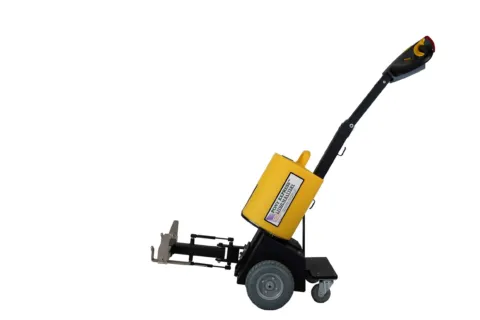
Pony Express 1061-HD Lithium Electric Tugger
2,000 lbTowing capacity
- Top speed
- 3 mph
- Battery
- 40 Ah lithium iron phosphate, hot swappable
-
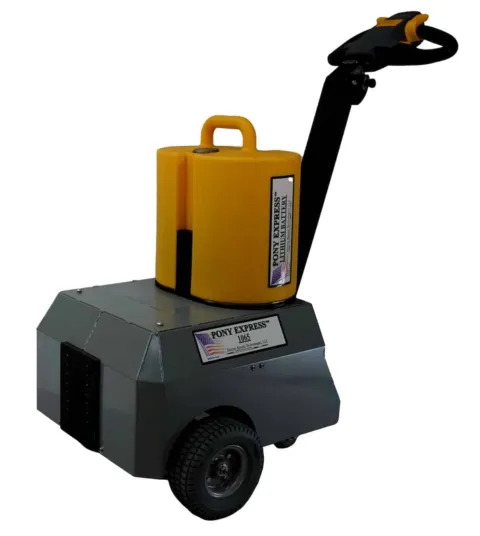
Pony Express 1065 Lithium Electric Tugger
5,000 lbTowing capacity
- Top speed
- 3 mph
- Battery
- 24 VDC, 40 Ah, lithium iron phosphate, hot swappable
Related collections

More guides
-
Compact Tuggers
How to Choose an Electric Tugger for Narrow Aisles and Tight Spaces
Measure your tightest aisle, door and elevator first, then pick the smallest tugger body that clears them and still tows your heaviest cart.
-
Lithium Tuggers
How to Pick a Tugger Battery for Runtime, Charging and Multi-Shift Use
Pick a tugger battery by your shift pattern. AGM fits one shift with an overnight charge, and a swappable lithium pack keeps a tugger working across back to back shifts.
-
Electric Tuggers
Does Your Facility Need a Walk-Behind or Ride-On Electric Tugger?
Most cart work in hospitals, laundries and warehouses fits a walk-behind tugger. A ride-on tug such as the RiderCaddy makes sense when one operator would otherwise walk long routes all shift.