
What Is a Tugger Machine and How Does One Work?
- Author
- By Raphael Perlmann
- Reading time
- 6 min read
- Machines
- 8 in this guide
Summary
An electric tugger tows wheeled carts so one operator can move a heavy load without pushing it by hand. This guide covers how a tugger works, where it is used and how to size one.
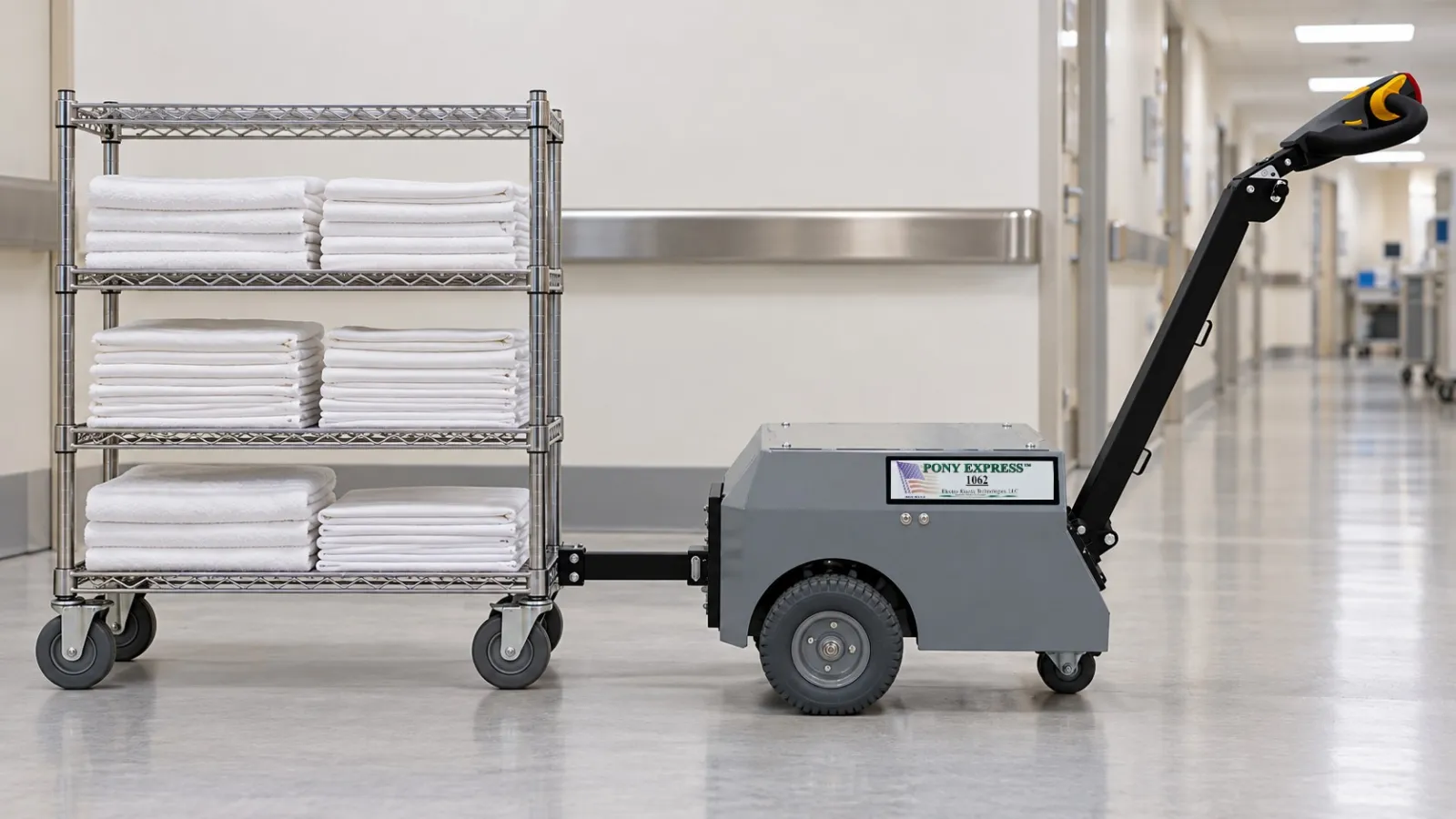
An electric tugger is a battery powered machine that tows wheeled carts. One operator walks with it, or rides on it, and steers. The motor does the pulling, so nobody has to push the full weight of a loaded cart by hand.
A tugger does not lift or carry the load. It hitches to a cart that already rolls on casters, or on rails for the heaviest jobs, and tows it at walking pace. It is not a forklift.
What it is
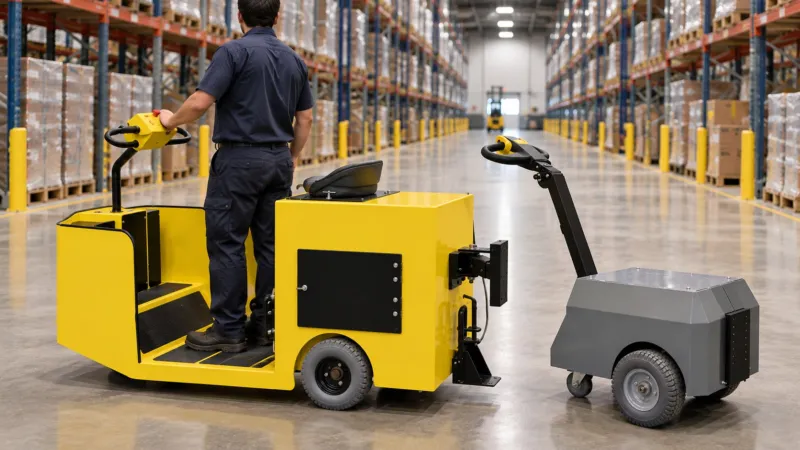
The same machine goes by several names. Electric tug, cart mover, walk-behind tugger and pedestrian tugger all mean a small drive unit with a handle at hand height that couples to a cart and tows it. A ride-on tug such as the RiderCaddy carries the operator on the machine for long routes.
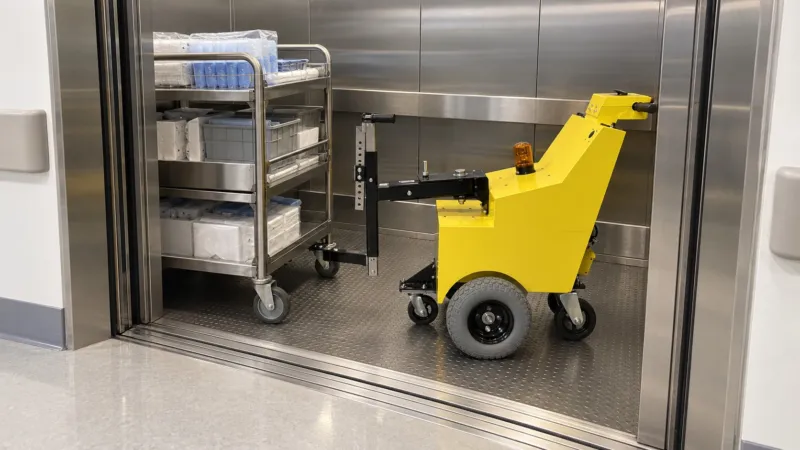
Tuggers earn their place wherever loaded carts move often. Hospitals tow linen, meal and supply carts through service halls and elevators. Laundries move linen carts and bulk bins between the soil and clean sides. Warehouses run trains of carts along long aisles and out to the dock. Plants move parts carts and trailers between work cells.
How it works
The operator hitches the cart to the tugger, then sets speed and direction with thumb controls on the handle. Every Pony Express tugger has a high and a low speed setting and tops out at 3 mph, a normal walking pace. On the Pony Express 1061 and the 1062-LS, the low setting runs up to 1.5 mph for crowded halls and elevator lobbies.
The safety features are in the controls. Models such as the 1061-HD, 1062 and 1065 use dead man operation. When the operator takes their hands off the controls, the unit comes to a controlled stop. A belly button emergency stop sits on the control head.
An electromagnetic parking brake holds a parked load on an incline. The 1062, the 1065 and the AC Tugger 25K+ also use regenerative braking to slow the load on the move.
The drive wheel is puncture proof and non-marking. It does not go flat and it leaves no marks on finished floors.
Power comes from an AGM or a lithium battery. The AGM models from the 1061 to the 1065-XHD run up to 8 hours on a charge. They recharge in about 4 hours on an onboard charger that plugs into a standard 120 or 240 volt outlet. The lithium models use an external charger, and their packs swap in seconds.
The hitch
The hitch locks the cart to the tugger so the two move as one. Changing the hitch is how one tugger tows different carts, so you buy a drive unit plus the hitch that fits your carts.
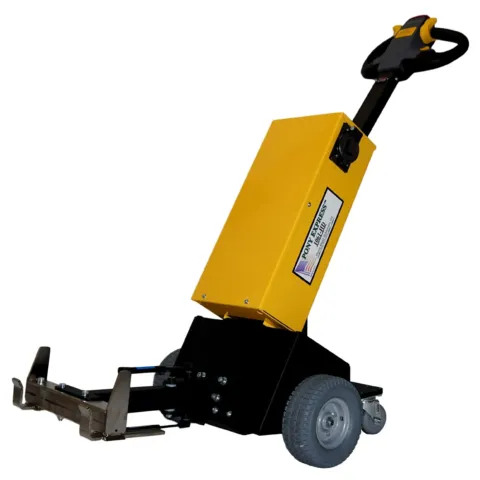
The Pony Express 1061-HD uses lockable adjustable hitch hooks with gas shocks and nickel plating that resists corrosion. The 1065 Lithium connects by draw bar, ring coupler or ball hitch.
The laundry models carry hitches for linen carts and bulk bins. The 1065-LS uses a quick-connect hitch that needs no changes to your bins. An optional bin-to-bin hitch lets it move several bins in one trip without the bins hitting each other.
When a cart needs something different, send us photos and dimensions of the cart and we match the hitch to it.
Benefits and limits
A tugger takes the push and pull off your staff. With a Pony Express tugger, one operator moves 1,500 to 25,000 lb on casters, depending on the model, with a thumb on the speed control. The load moves at walking pace, and the brakes keep it under control on ramps.
A tugger is also a capital purchase. It needs charging time and a trained operator. It makes the most sense where loaded carts move every shift. A cart that moves once a week may not need one.
Where the line between the two machines falls, job by job, is when to use a tugger instead of a forklift.
How to size one
Size a tugger by the total weight it pulls. Add the weight of every cart in the train to the heaviest load each one carries. Then pick a model that tows more than that total on a flat floor. A ramp lowers what any tugger can pull, so give us the slope as well.
| Model | Tows on casters | Width | Battery |
|---|---|---|---|
| Pony Express 1061 | 1,500 lb | 22 in | 35 Ah AGM |
| Pony Express 1061-HD | 2,000 lb | 22 in | 35 Ah AGM |
| Pony Express 1062 | 2,000 lb | 24 in | 35 Ah AGM, 70 Ah AGM option |
| Pony Express 1065 | 5,000 lb | 24 in | 70 Ah AGM |
| Pony Express 1065-XHD | 7,500 lb | 24 in | 70 Ah AGM |
| Pony Express AC Tugger 25K+ | 25,000 lb | 30 in | 48 VDC, 100 Ah AGM or 120 Ah lithium iron phosphate |
Footprint matters as much as capacity. The 1062, 1065 and 1065-XHD share a body 25 inches long and 24 inches wide. The 1061 and 1061-HD are 22 inches wide, and their length adjusts from 22 to 42 inches. The AC Tugger 25K+ is 52 by 30 inches. Pick the body that fits your halls, doors and elevators as well as your load.
Lithium versions of several models swap packs in seconds and report charge to a phone app. The 1061-HD Lithium tows the same 2,000 lb as the AGM model and recharges in about 2 hours.
We also carry the CartCaddy tugs. The CartCaddyLite electric cart puller pushes or pulls carts up to 1,000 lb, the CartCaddyShorty compact electric tug up to 3,000 lb, and the CartCaddyHD ChainDrive electric tug moves carts and equipment up to 50,000 lb.
Once the size is settled, what sets the price of an electric tugger is the battery, the hitches and freight.
Questions
What is an electric tugger used for?
It tows wheeled carts across indoor floors so one operator moves a load without pushing it by hand. Common jobs are linen, meal and supply carts in hospitals, linen carts and bulk bins in laundries, cart trains in warehouses and parts carts in plants.
How fast does an electric tugger go?
Every Pony Express tugger tops out at 3 mph, which is walking pace. Each one also has a low speed setting for tight spaces. The operator walks with the load, so the speed is set to match a person on foot.
How much weight can an electric tugger pull?
It depends on the model. The Pony Express line tows 1,500 to 25,000 lb on casters on a flat floor. The 1065 Lithium tows up to 20,000 lb on rails, and the AC Tugger 25K+ up to 100,000 lb on rails. The CartCaddyHD ChainDrive moves carts and equipment up to 50,000 lb. A ramp lowers the load any tugger can pull.
How long does a tugger battery last on a charge?
The AGM models from the 1061 to the 1065-XHD run up to 8 hours on a charge and recharge in about 4 hours. The lithium models swap packs in seconds. Ask us for the run time of a lithium model on your route.
Is a tugger the same as a forklift?
No. A forklift lifts and stacks loads. A tugger tows loads that already roll and never lifts them off the floor.
Machines in this guide
-
-
-
-
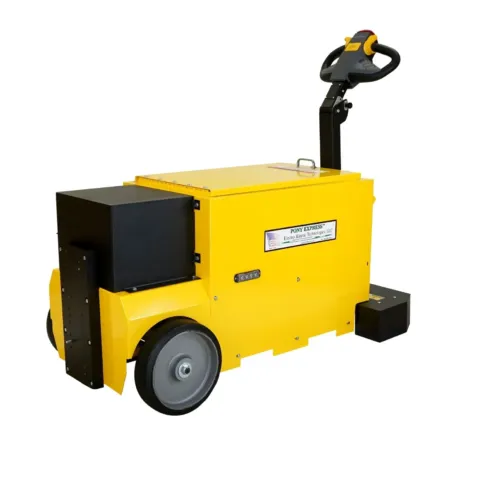
-
Pony Express 1061-HD Electric Tugger
2,000 lbTowing capacity
- Top speed
- 3 mph
- Run time per charge
- 8 hours
-
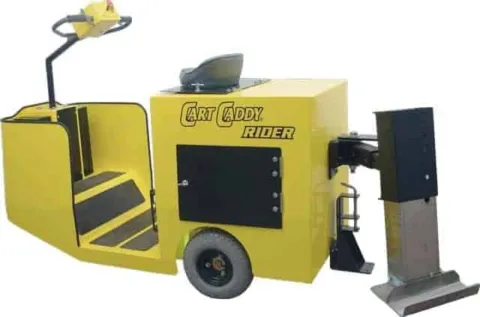
RiderCaddy Ride On Electric Tug
10,000 lbTowing capacity
- Run time per charge
- 16 hours
- Battery
- 36 V, three 115 amp batteries
-
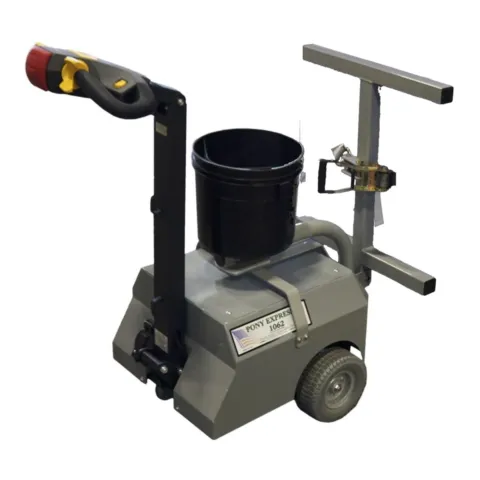
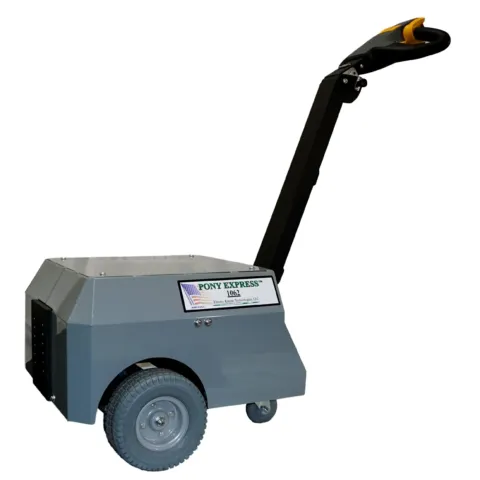
Pony Express 1062-LS Linen and Laundry Tugger
2,000 lbTowing capacity
- Top speed
- 3 mph
- Run time per charge
- 8 hours
-
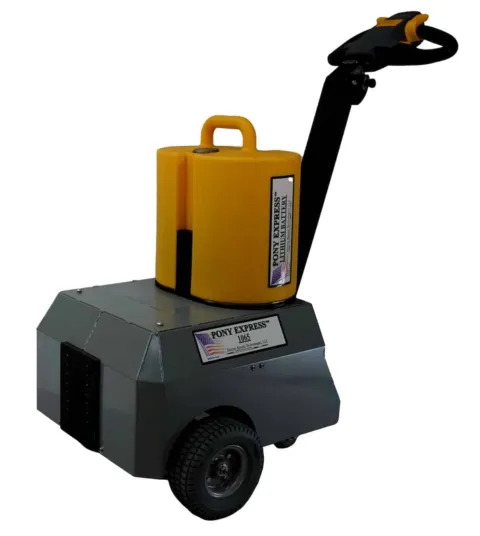
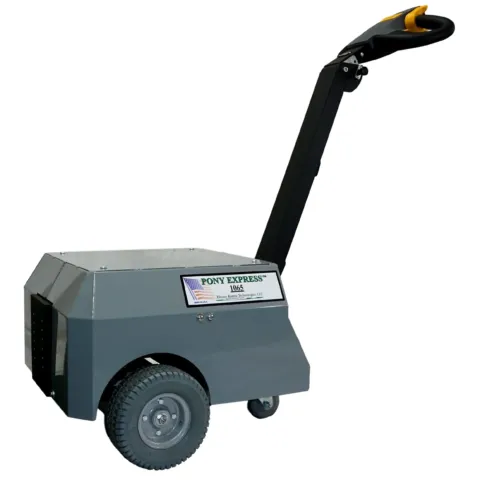
Pony Express 1065 Lithium Electric Tugger
5,000 lbTowing capacity
- Top speed
- 3 mph
- Battery
- 24 VDC, 40 Ah, lithium iron phosphate, hot swappable
Related collections

More guides
-
Compact Tuggers
How to Choose an Electric Tugger for Narrow Aisles and Tight Spaces
Measure your tightest aisle, door and elevator first, then pick the smallest tugger body that clears them and still tows your heaviest cart.
-
Lithium Tuggers
How to Pick a Tugger Battery for Runtime, Charging and Multi-Shift Use
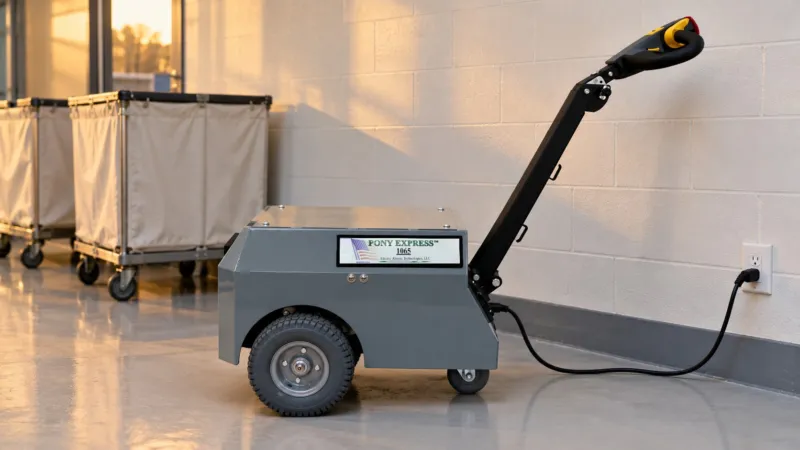
Pick a tugger battery by your shift pattern. AGM fits one shift with an overnight charge, and a swappable lithium pack keeps a tugger working across back to back shifts.
-
Electric Tuggers
Does Your Facility Need a Walk-Behind or Ride-On Electric Tugger?
Most cart work in hospitals, laundries and warehouses fits a walk-behind tugger. A ride-on tug such as the RiderCaddy makes sense when one operator would otherwise walk long routes all shift.